Practical Watch Care & Daily Protocols
Mechanical watches thrive on thoughtful handling. Simple everyday habits—how you unscrew the crown, where you set the piece down at night, and when you change the date—prevent costly workshop repairs and keep your movement running true.
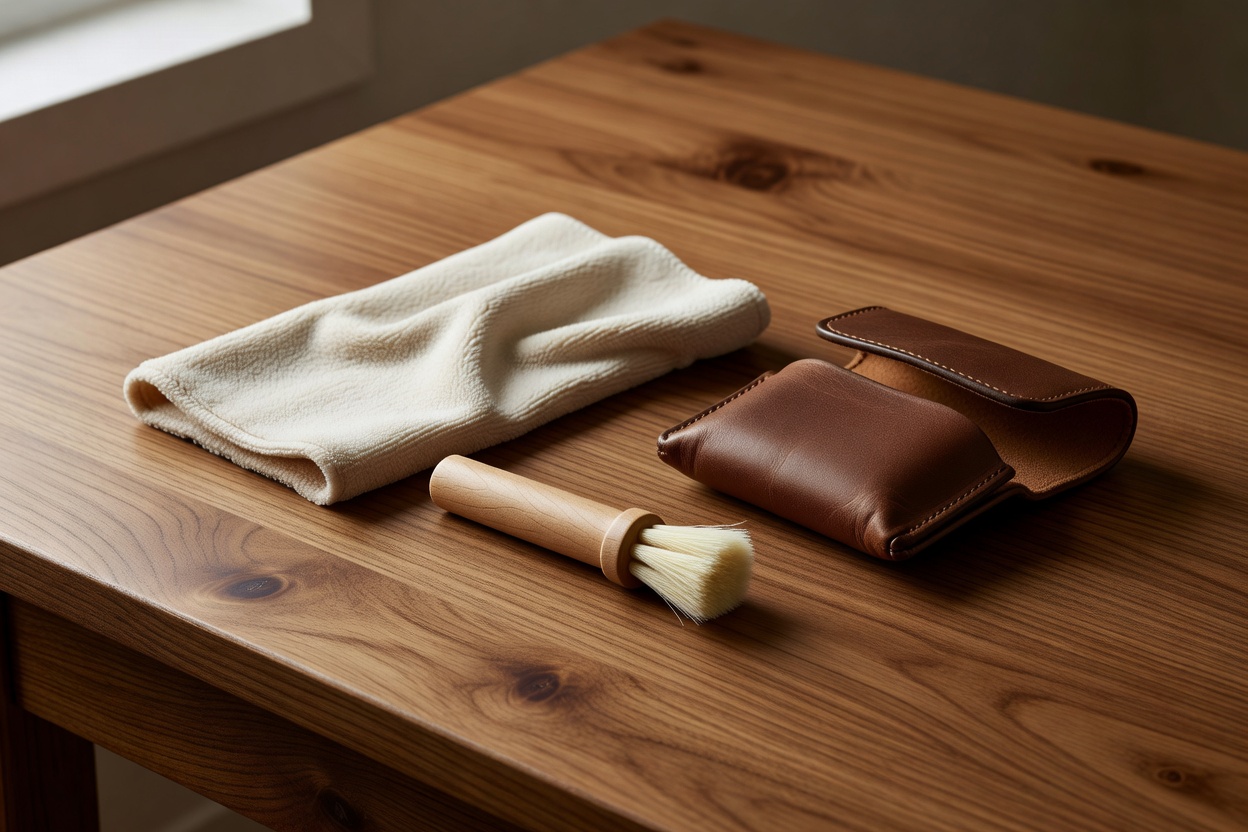
Gentle exterior care requires nothing more than lukewarm water, a soft horsehair brush, a lint-free cloth, and a dedicated storage pouch.
Routine Stewardship: Seven Essential Habits
You do not need to be a certified horologist to protect your mechanical timepiece. By mastering seven foundational habits, you can extend the operational life of gaskets, pivots, and case components by years.
1. Proper Winding Technique: Off the Wrist
Always remove your watch from your wrist before winding or setting the time. When you attempt to turn or pull the crown while the watch is strapped to your wrist, you apply lateral, asymmetric torque to the winding stem. Over time, this bends the stem, loosens crown-tube gaskets, and introduces moisture ingress.
Wind smoothly in clockwise revolutions between thumb and forefinger. For manual wind calibres, stop the moment you feel firm physical resistance. For automatics, thirty complete rotations provide full power without straining the mainspring bridle.
2. The Calendar Safety Window (9 PM to 3 AM)
Most modern and vintage date mechanisms begin indexing the date wheel hours before midnight. Gears with delicate drive cams slowly advance the disc. If you pull the crown to the rapid date-set position while these teeth are meshed, you risk shearing the delicate date jumper spring or chipping brass teeth. Always roll the hands forward past 6:00 AM before utilizing the quickset date.
3. Cleaning the Case Exterior Safely
Skin oils, salt residue, and environmental grime gather beneath bezels and inside bracelet links, acting like fine sandpaper that stretches steel bracelet pins.
- Water-Resistant Watches (100m+ tested): Rinse under lukewarm running tap water using a drop of neutral liquid soap and a soft-bristled baby toothbrush. Never use chemical solvents, ammonia, or ultrasonic jewelry cleaners on an assembled watch case (the vibrations shatter oil boundaries inside the movement).
- Vintage or Dress Watches (Non-water-resistant): Wipe down with a barely damp microfiber cloth, followed immediately by a dry polishing cloth. Keep moisture entirely away from crown seams and snap-on caseback joints.
4. Leather Strap Maintenance
Fine calf, alligator, and cordovan leathers deteriorate rapidly if saturated with sweat or moisture. Never immerse leather straps in water. Allow worn straps to breathe for at least 24 hours between wears. Treat high-grade leather with small dabs of neutral beeswax balm once or twice a year to maintain flexibility.
5. Navigating Magnetic Fields
Modern living is filled with unseen neodymium magnets: iPad smart covers, magnetic phone mounts in vehicles, handbag clasps, and inductive chargers. Keep your mechanical watches at least 15 to 20 cm away from these items. If your watch suddenly gains 2 to 10 minutes overnight, suspect magnetism before assuming mechanical breakdown.
6. Travel and Climate Precautions
Air travel introduces cabin pressure drops. While quality timepieces easily handle 0.8 bar cabin pressure, extreme thermal shocks (such as moving from a 40°C beach directly into cold seawater, or stepping into a sauna) cause rapid case expansion and gasket contraction. Never wear a fine mechanical watch in saunas, steam rooms, or hot tubs.
7. Long-Term Storage
If putting a watch aside for months, do not leave it on an aggressive winder running 24 hours a day. Modern synthetic oils do not coagulate like obsolete animal fats, so continuous winding merely introduces needless mechanical wear. Store the watch stopped, in a dry, dark, temperature-stable environment (ideally 15°C–22°C) inside a breathable watch pouch or case. Wind and run it for 24 hours every two to three months to redistribute lubricants across wheel teeth.
Interactive Daily Care Checklist
Check off your weekly or monthly care routine below. Your progress persists in your browser.
Frequently Asked Care Inquiries
Do I need an electric watch winder box?
For standard three-hand automatic watches or simple date models, watch winders are unnecessary. Winding and setting a stopped watch takes thirty seconds. Winders are only genuinely useful for perpetual calendars or complex astronomical watches where resetting calendar indications is time-consuming.
Can I use ultrasonic baths for my watch bracelet?
Yes, but ONLY if the metal bracelet is completely detached from the watch case. Never submerge a complete watch into an ultrasonic tank. The ultrasonic shockwaves can disrupt movement lubricants and shatter delicate hairspring geometries.
How often should water gaskets be inspected?
Water resistance is not permanent. Gasket rubber naturally degrades and dries out over time. If you swim or dive with your watch regularly, have its seals dry-tested annually at a workshop before the summer swimming season begins.
Questions about a specific watch model?
Reach out to our network technical desk for practical, independent horological guidance.